
Winter Low-Sun Glare & Early Darkness: Choosing Window Furnishings for Your Home Office and Living Room
The winter window problem is rarely about whether the room is cold. It is about whether you can see clearly and whether you can keep the outside out. Through July in Melbourne the sun hangs low in the sky all afternoon, so the light comes in almost horizontally, raking straight across desks, laptop screens and TVs — harsh to look at and tiring to work under. By around five o’clock it is already dark, which brings privacy concerns hours earlier than in summer: neighbours and passers-by are still about while the lights are already on inside.
Neither problem is about heat. Both are about controlling light and sightlines. The fix is choosing the right furnishing type — sheer, light-filtering or blockout — and, better still, layering them on a double track so one setup handles daytime glare and evening privacy. This guide works room by room, through the home office and the living room, and shows how orientation (north and west are worst for low winter sun) should drive the choice. For the big-picture decision first, see our guide on curtains versus blinds.
Why the Winter Sun Feels So Harsh Indoors
Summer and winter sun are difficult in completely different ways. In summer the sun sits high and the light comes from above, so an eave or a top-down cover is enough. Winter is the opposite: the sun stays low across the whole afternoon and the light comes in almost horizontally, which means eaves and high shading barely help — it passes straight through the window and lies flat across your desk and your screen.
North- and west-facing rooms cop it worst. The western sun on a Melbourne winter afternoon is especially fierce, a whole sheet of low-angle light sweeping in — a washed-out reflection on a laptop screen, an unreadable washout on the TV, a squint-inducing beam across the desk. It directly affects how usable the room is in the afternoon: you either draw a heavy curtain and shut yourself into the dark, or you put up with the glare.
Add the early darkness. Winter is dark by about five, which pushes the privacy need forward by hours: switch on a lamp in the evening and the room becomes a lit box, clearly visible from outside. So winter furnishings have to answer two questions at once — how to soften the harsh direct light in the afternoon, and how to hold privacy after dark in the evening.
The Three Core Options: Sheer, Light-Filtering, Blockout
Start with the three most basic furnishing types, because every combination that follows is built on them. A sheer softens the light, keeps your view and natural daylight through the day and keeps the room open, but its privacy is limited — once the lamps are on after dark it does little to block the view in. A light-filtering fabric diffuses the harsh direct light and noticeably cuts glare while keeping the room bright — it is the workhorse for daytime light control. A blockout stops light entirely, and drawn in the evening it gives complete privacy, which makes it the first choice for media rooms and bedrooms.
The key point: on its own, none of the three satisfies both day and night. A sheer is good by day but does not screen at night; a blockout is perfect at night but shuts the room into darkness when drawn by day. That is exactly why layering comes next. On the product side, our blockout curtains and sheer curtains ranges are designed to be combined. Because fabric colour and light transmission are hard to judge on a screen, we strongly suggest ordering a free sample pack before you buy and holding it up in your own light.
Layering on a Double Track: One Setup, Day and Night
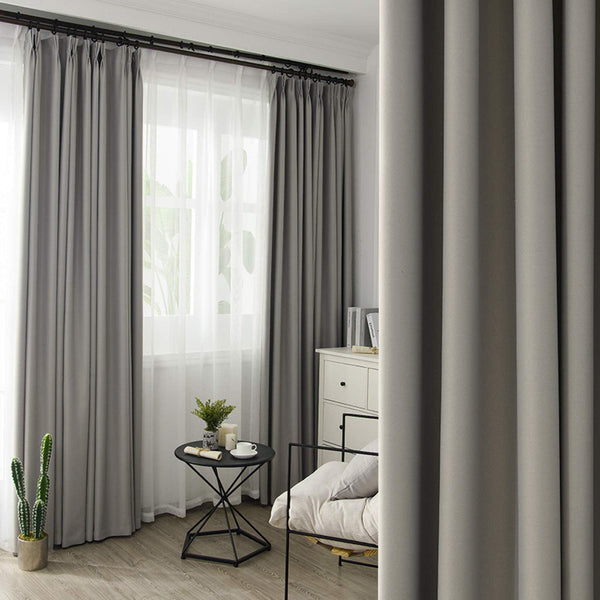
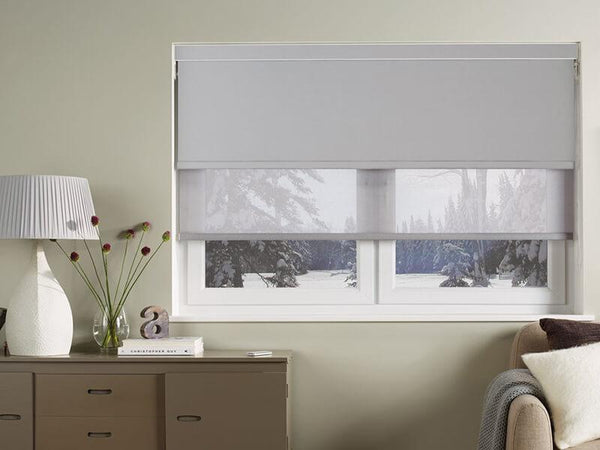
The logic of layering is straightforward: on a single double track, hang a sheer or light-filtering layer at the front and a blockout at the back. That one setup then covers the different needs across a whole day.
By day, draw the front sheer or light-filtering layer to soften and diffuse the harsh low-angle beam while keeping daylight and your view outward — the room stays bright and open, and the reflection on your screen is knocked back. In the evening, when it goes dark, draw the blockout behind and you have full privacy immediately, matching the winter privacy need that arrives early. Compared with a single layer, the advantage of layering is flexibility: you can switch between softened daylight and complete cover as the light changes through the day, instead of choosing between fully bright and fully dark.
For rooms facing low-angle sun, this layering is close to the most hassle-free answer. For more combinations, see our layered window treatments inspiration; and if your windows are an unusual size and need a custom double-track solution, see custom blinds and curtains.
Roller Blinds vs Curtains — Choosing by Room

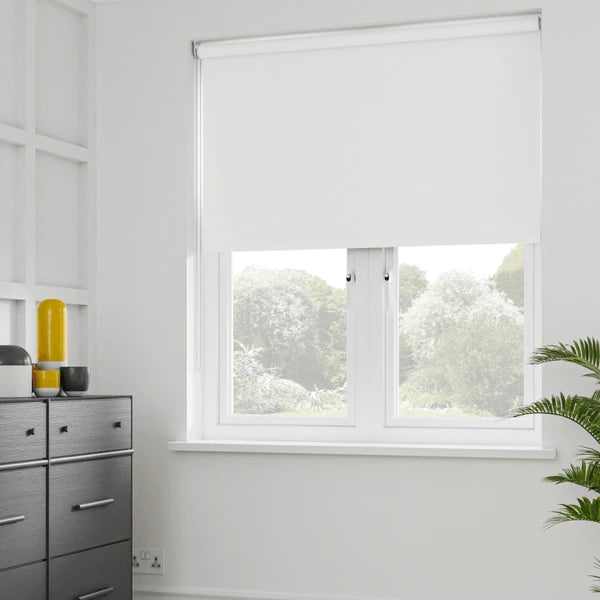
Rollers and curtains each have their strengths, and which you choose depends largely on how the room is used. A roller blind is clean and sits close to the glass, and its biggest advantage is that you can pull it precisely to a set height to cover exactly the band of glare landing on your screen while keeping the daylight above and below — that ability to control light locally and precisely is just what a study needs. Curtains are softer and cover more, with more layering and more complete blocking, which suits living rooms and bedrooms that want atmosphere and full cover.
The two can also be combined in the same room — a roller plus a sheer curtain, say — for both precise light control and a softer look. Room preferences run roughly like this: a study values precise light control, a living room values mood and overall cover. To make a finer decision between blockout and light-filtering, see our blockout versus light-filtering guide. Our roller blinds are named after Australian suburbs (Bondi, Toorak, Vaucluse and others), and for a glare problem a darker blockout option controls the light best.
The Home Office: Fixing Screen Glare
Diagnose the problem first: afternoon direct light lands on the screen, creating reflections and bright washout, and after a while your eyes ache and your focus slips. This is the most real winter-afternoon frustration for many people working from home.
The first-choice solution is a light-filtering roller, pulled precisely to the height where the glare falls, blocking the band of light on the screen while keeping the daylight through the rest of the window so the room does not go dim. When you need to be on a video call, or want full cover, add a blockout layer behind. Placement helps too: set the screen at 90 degrees to the window where you can, and use the furnishing to control the residual glare — better than simply drawing a curtain. Avoid the single-layer, all-bright-or-all-dark setup that forces a choice between glare and darkness, neither of which is comfortable. To browse custom options, see our roller blinds range.
The Living Room: TV Glare and Early-Evening Privacy
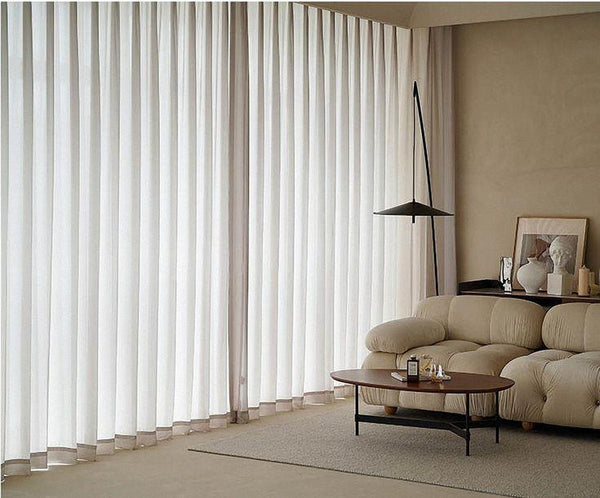
The living room has two pain points, one by day and one in the evening. By day, the low afternoon light on the TV screen causes washout, leaving the picture pale and hard to see. Here you can draw a sheer through the day to soften the light while keeping the room’s openness and view, then pull a light-filtering layer across the section by the TV when you actually sit down to watch, to knock back the reflection on the screen.
By around five, when it goes dark, privacy takes over — draw the blockout curtain for complete privacy and stop the lit living room being on show. For the single large window of an open-plan living room, consider zoning it: prioritise light control on the side near the TV, and prioritise view and atmosphere on the side by the sofa or dining area. On colour and texture, neutral tones such as soft grey, oat and charcoal wear well and coordinate easily with the room. The most reliable living-room combination is still a sheer plus a blockout on two layers — sheer curtains by day and blockout curtains in the evening.
Matching to Orientation, and DIY vs Expert Fitting
Orientation sets the priorities. North- and west-facing windows get the strongest low-angle winter sun and most deserve a two-layer light-filtering-plus-blockout treatment, cutting glare by day and giving privacy in the evening. East-facing windows are mainly morning light, and south-facing windows get the least direct sun and are the easiest to handle. Rank your windows by orientation, then decide how much to invest in each — smarter than fitting every window the same way.
On how to order, as a factory-direct brand we offer two paths: made-to-order to your measurements, and pre-made standard sizes that are ready to hang. A few things to be clear about here: DIY measuring is the customer’s responsibility, and because custom orders are made specifically to your sizes they are non-returnable, so always order a free sample to confirm colour and light transmission, and measure carefully. If you are not confident measuring and installing yourself, choose our expert fitting — see professional measure and quote. Finally, households with young children should take particular care with corded products, and cordless options and safety devices should follow the ACCC’s safety standard for corded internal window coverings.
The winter furnishing keyword is not insulation but light control plus privacy: the low sun sweeps across screens and TVs all afternoon, and darkness by five pushes the privacy need forward by hours. The answer is to choose the right type — sheer, light-filtering or blockout — and layer them on a double track so one setup cuts glare by day and gives privacy in the evening. Orientation sets the priority, and north- and west-facing windows most deserve layering. Order a free sample to check colour and light first, and choose DIY or expert fitting as you prefer.
Window furnishing performance varies by window, orientation and installation; corded product safety follows the applicable ACCC standard, DIY measurements are the customer’s responsibility, and custom orders are non-returnable, so order a sample first.