
Curtains vs Blinds: Six Rooms, Six Quick Decisions
Stop comparing them in general. Your bedroom and your bathroom need different answers.
Forget "Curtains vs Blinds." Ask "Which Room?"
Most window covering blogs treat curtains vs blinds as a single yes-or-no question. It's the wrong question.
An average Australian home has 4 to 6 rooms that need window coverings, and each one has its own physical constraints. Your bedroom needs blackout. Your bathroom needs to survive 70% humidity. Your study needs to kill screen glare. Your kitchen needs something you can wipe down. Picking one product for the whole house guarantees you'll compromise somewhere.
Five variables drive the call: light control, privacy, insulation, moisture resistance, and space. Every room weighs them differently. That's why the blackout curtain that works beautifully in your bedroom will grow mould in your bathroom within a year, and why putting it in your study means switching the lamp on at 2pm.
This guide is room by room. Each section is under 200 words. If you only want the answer, jump to the table in Section 7.
One thing worth doing before you read further: order a free sample pack. Colour and texture lie on a screen — that "linen-look" beige that looks warm online can read grey under your north-facing afternoon light. Reading ten blogs is no substitute for taping a fabric swatch to your window for 24 hours.
1. Bedroom — Layered Wins, Single-Layer Compromises
The job: maximum blackout, privacy, quiet.
The bedroom is the most decision-critical room — because you sleep here. A 5:45am shaft of sun hitting your face ruins the whole day.
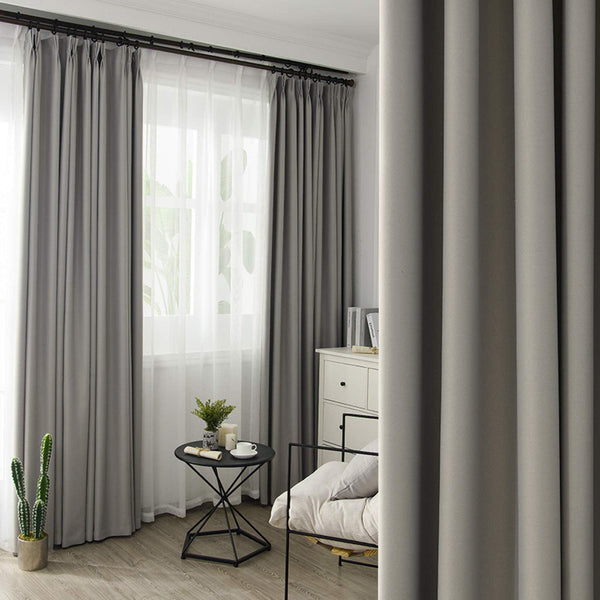
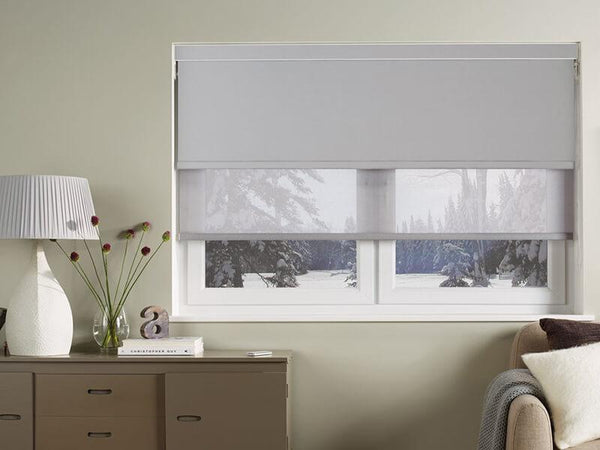
First choice: blockout roller blind hugging the window + sheer curtain on the outside layer. This is the layered approach, and it's the only configuration that genuinely solves the problem. The roller does the blackout work (tight to the frame, no side leakage); the sheer softens the visuals so the room doesn't feel like a motel. Both are CAS Factory Direct staples — the same combo costs 40–50% more in a showroom.
Budget option: a single layer of double-pleat blockout curtains (CAS Milan or Vienna). Single-layer double-pleat blocks 85–90% of light — slightly less precise than a roller, but visually softer. The trade-off is you lose top-and-bottom light control. Without a pelmet, expect a thin band of light leak from above.
Skip these:
- Vertical blinds in the bedroom — gaps between vanes turn 6am sun into horizontal stripes across the bed
- Timber venetians — same problem, plus light leaks through the tilt-rod holes
- Nursery rule: cordless only — this is ACCC mandatory, not optional
East-facing and west-facing bedrooms need this nailed. Sydney summer sunrise is 5:40am. Get it wrong and you've installed a biological alarm clock.
→ See Blockout Roller + Sheer layered combos
2. Living Room — Light by Day, Privacy by Night

The job: maximum daylight, evening privacy, visual anchor.
The living room runs opposite to the bedroom: blackout is what you don't want. Turning your living room into a dark cave during the day is the #1 most common mistake we see.
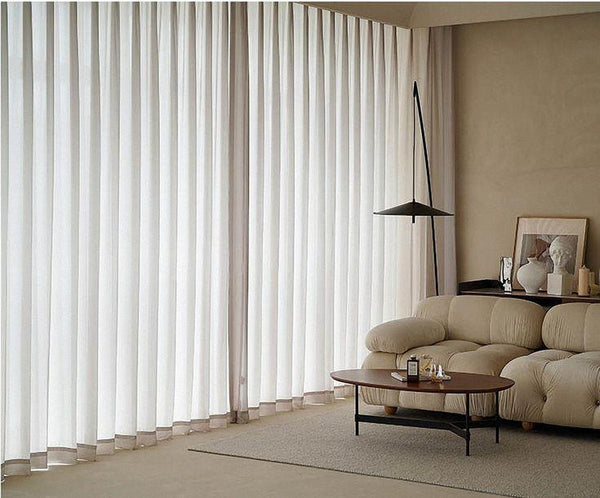
First choice: sheer curtain hanging full-time + light-filtering roller blind behind. Daytime, the roller stays up and the sheer diffuses incoming light beautifully. Evening, the roller drops and privacy is sorted. The sheer also pulls its weight visually — living rooms without sheers tend to feel like offices.
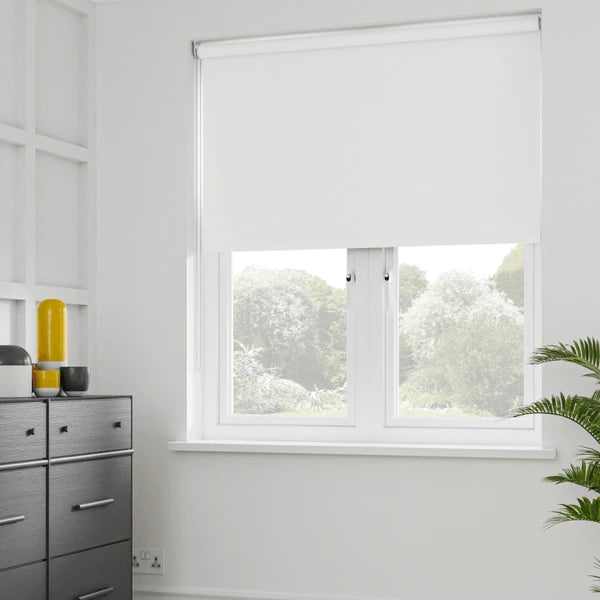
Budget option: a single light-filtering roller blind. Note: light-filtering, not blockout. The point of light-filter is it still lets light in when it's down, so the room doesn't go cave-mode. If you can only afford one layer and want day-and-night flexibility, this is the best value single product.
Skip these:
- Single-layer blockout in the living room — dark cave when closed, no privacy when open, dollar for dollar the worst-value choice
- Heavy double-pleat curtains in low-ceiling rooms — visually crushing
- Exception: walls with a TV or projector directly opposite a window — here, blockout wins, because daytime screen glare is the bigger problem
For ceilings over 3m: consider motorised rollers. Hand-cranking a 3-metre blind every day gets old fast. The $200–400 upgrade is usually worth it.
→ Sample the Sheer + Roller combo
3. Bathroom — Blinds Mostly, With One Exception
The job: handle high humidity, hold privacy, wipe clean.
Bathrooms have the harshest physical constraints in the house — sustained 70%+ humidity will destroy ordinary fabrics within months.
First choice: PVC venetian blinds or aluminium roller blinds. Both are waterproof, wipeable, mould-proof. PVC venetian wins if you want to adjust light angle. Aluminium roller wins if you want it to disappear visually when retracted. Got kids who'll bash into vane edges? Pick the roller.
The exception: very well-ventilated large bathrooms (strong exhaust fan + decent window + you actually open the window) can carry a short polyester moisture-resistant curtain for a softer look. This is the exception, not the default. If your bathroom is a small apartment ensuite with no window or just a fan vent — stick with the first choice and don't experiment with fabric.
Skip these:
- Timber venetians — swelling and warping is a question of when, not if
- Cotton or linen curtains — mould spots within a year, no matter how often you wash them
- Floor-length curtains anywhere near a vanity or shower — hygiene disaster
- Louvre vents below the window — must use venetians, not roller. Roller down = airflow blocked
Already have a frosted-glass bathroom window? You can skip window coverings entirely. The glass solves privacy; adding fabric is purely aesthetic.
→ Browse the PVC Venetian range
4. Kitchen — Wipeable Wins, Fabric Loses
The job: handle cooking oil splatter, easy to clean, stay clear of the bench.
The kitchen's core conflict: you want privacy and light control, but you can't let your window covering join the cooking-oil cycle. Anything that can't take a damp cloth is out.
First choice: light-filtering roller blind or aluminium venetian. Both wipe down in seconds, won't absorb oil, won't trap smells. Roller for modern minimal kitchens, venetian for more traditional fitouts. The look call comes down to your kitchen's aesthetic.
Skip these:
- Any long curtain — will eventually trail into the sink or near the cooktop. Oil-stained fabric is essentially write-off
- Timber venetians — absorb cooking oil and discolour within months
- Roman blinds — fold creases are natural traps for grease and dust. Within a year you'll want to rip them down
Window above a tiled splashback: you can skip the covering. Frosted or obscure glass solves privacy; anything extra just collects dust.
Got an open-plan kitchen-and-dining? Zone it. Curtains over the dining side for warmth, roller blind over the cooktop window for cleanliness. Same colour family to tie them together.
→ See Roller Blinds for kitchens
5. Study / Home Office — Glare Is the Enemy
The job: kill screen glare, look decent on Zoom, stay comfortable for long sessions.
Working from home went from temporary to permanent after 2020, and study window coverings stopped being decorative and became productivity tools. The core problem here isn't insulation or privacy. It's glare.
First choice: sunscreen roller blind (the semi-transparent mesh fabric). The logic: closed during the day, you can still see out, people can't see in, light is diffused into soft non-reflective ambient, your screen has no glare, and your Zoom background has texture instead of looking like a hostage video.
Upgrade: double roller (sunscreen + blockout on the same bracket). Sunscreen for daily use, blockout for important video calls or harsh western afternoon sun. CAS's double-roller setup runs roughly 35% under comparable showroom pricing.
Skip these:
- Pure blockout — defeats the point of working from home if you need the desk lamp on at noon
- Pure sheer — fine by day, fishbowl by night when you're working late
- White vertical blinds — vanes catch reflections and bounce them across your screen
Screen placement rule: monitor at 90° to the window (window on your side, not behind or in front of you). This is the ergonomic sweet spot. Window behind = screen reflection. Window in front = backlit screen, washed-out contrast.
→ Sample the Sunscreen Roller fabric
6. Entry & Hallway — Style Beats Function
The job: visual layer (functional needs are basically nil).
These are transition spaces. You don't sleep in the hallway, work in the stairwell, or shower in the entry. Light, privacy, and insulation aren't the brief.
First choice: sheer curtains for softness, or light-filtering roller blinds for a more restrained look. The shared property: neither steals visual attention from the actual focal point of the space — your floors, art, or stair detailing. The window covering plays a supporting role here, not lead.
Special cases:
- Tall windows or stairwell windows: cordless or motorised, always. Reaching the cord on a 3-metre window is a real pain point — people stop using anything that's too hard to operate
- Stained glass or decorative windows: leave them bare. Adding a covering buries the design
Don't overthink this one. Match the colour family of the rooms either side and move on.
7. One Table to Cover the Whole House
If you only screenshot one thing from this article, make it this:
| Room | First Choice | Budget Option | Avoid |
|---|---|---|---|
| Bedroom | Blockout roller + sheer (layered) | Single-layer double-pleat blockout | Verticals / timber venetians |
| Living | Sheer + light-filter roller | Single light-filter roller | Single-layer blockout |
| Bathroom | PVC venetian / alu roller | (Short polyester if well-ventilated) | Timber / cotton-linen / floor-length |
| Kitchen | Roller / alu venetian | — | Long curtains / Romans / timber |
| Study | Sunscreen roller (+ optional blockout double) | — | Pure blockout / pure sheer |
| Entry / Stairs | Sheer / light-filter roller | — | Hand-cord on high windows |
This covers about 90% of Australian homes. The remaining 10% — south-facing floor-to-ceiling glazing with double-pane and forced ventilation — are worth a quick email to our fitting team.
The 30-Second Plan — Don't Wait Until You've "Worked It All Out"
Most people stall on window covering decisions for six months. They save Pinterest boards, walk through three showrooms, ask four friends, install nothing.
Don't do that. Three steps:
Step 1: Order a free sample pack. Colour and texture lie on screens — fabric in hand is the only reliable test. CAS ships sample packs free across Australia, 3–5 business days. Tape the swatches to each window for 24 hours and watch what they do in morning, midday, and evening light. Skip this step and every decision downstream is a guess.
Step 2: Measure each window twice. Twice, because Australian window frames (especially in older houses) are often not perfectly rectangular — the top and bottom widths can differ by 5–10mm. Record width × drop. Add 30cm to each side for stack-back clearance. Add 5cm puddle at the floor if you want curtains to break softly. We have a step-by-step measuring guide with photos.
Step 3: DIY or Expert Fitting?
- DIY works for: single rollers, single standard-sized windows, you've got a drill + spirit level + someone to hold the other end
- Expert Fitting is worth it for: windows over 2.7m tall, dual-track configurations, 3+ windows, motorised setups, stairwells, anything where height or precision will bite you
The whole CAS Factory Direct model is: skip the showroom markup, pass the saving on. The catch is you need to measure yourself and accept samples by post. This article saves you from walking through six showrooms — but the sample pack step is non-negotiable.
→ Order your free sample pack →
→ Prefer not to DIY? Book Expert Fitting →
CAS Blinds is a Sydney-based Factory Direct window furnishings brand.. Blinds, Curtains, Awnings, and Shutters — DIY-ready or with Expert Fitting. All product manufactured in-house, sold direct, no showroom markup.