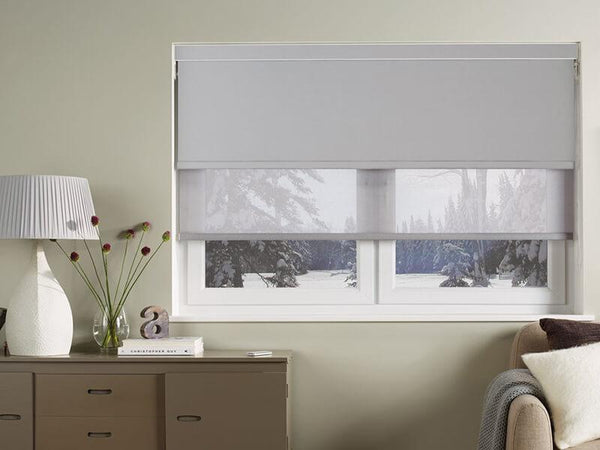

Motorised Blinds & Curtains: Are They Worth It for Sydney Homes?
Motorised blinds used to be a luxury you'd only see in architect-designed homes or high-end hotel rooms. That's changed. Battery-powered motors, smart home compatibility, and local manufacturing have brought the price down to a point where Sydney homeowners are now routinely adding motorisation to roller blinds, curtain tracks, and outdoor awnings — often for a few hundred dollars extra per window.
But is it worth it for your home? The honest answer is: it depends on where you're putting it. This guide covers when motorisation genuinely improves daily life, when it's an indulgence you probably won't use, and what you actually need to know before ordering.
What "motorised" actually means in 2026
The most common setup we install in Sydney homes uses a tubular motor inside the roller tube of a blind or inside a curtain track drive. You can't see the motor — it sits behind the fabric or inside the track housing. There are no visible control boxes and no wall switch required for the battery version.
There are two power options:
- Battery-powered: A rechargeable lithium battery is built into the motor. You charge it once every 6–12 months via a USB cable that plugs into the end of the blind — while it's still hanging in place. No electrician, no wiring, no holes in walls.
- Hardwired: The motor connects to your home's 240V power via a transformer in the wall or ceiling. Requires an electrician. Suits new builds, renovations, or situations where you're already opening up walls.
Both options work with a handheld remote, a smartphone app (via a bridge device or built-in Wi-Fi), and voice commands through Google Home or Amazon Alexa. For Apple HomeKit, a compatible bridge connects the system.
The five situations where motorisation is genuinely worth it
1. High or hard-to-reach windows
This is the clearest case. A skylight, a window above a staircase, a wide panoramic window where you'd need to walk across the room to reach the far end — pulling a cord or reaching for a wand every morning is genuinely annoying, and motorisation solves it completely. One button from the couch, done.
We install a lot of motorised roller blinds in Sydney apartments with full-height windows that start at ankle height and run to the ceiling. The blind is physically difficult to reach at the bottom. Motorisation isn't a luxury here — it's the practical choice.
2. Bedrooms, especially if you wake before dawn
A blockout blind or curtain that opens at the touch of a button — or on a timer — is a surprisingly significant quality-of-life upgrade. You can set the blind to open at 7am so you wake to natural light, or close it from bed at night without getting up.
For parents with young children: being able to close the nursery blind quietly from outside the room, without opening the door and potentially waking a sleeping baby, is something our customers mention more than almost anything else.
3. Multiple windows in an open-plan living area
If you have four or six windows across a north-facing living and dining area, closing them all individually every afternoon is a chore you'll eventually stop bothering with. A grouped scene — one button press closes all windows in a zone simultaneously — changes the behaviour entirely. People actually use it.
4. Outdoor blinds and awnings
Outdoor roller blinds and awnings should always be motorised if your budget allows. A wind gust while you're inside can damage a manually-wound outdoor blind if it's left extended. Motorised outdoor blinds with a wind sensor retract automatically when the wind picks up. Manual outdoor blinds require you to be present and paying attention.
5. Accessibility and ageing in place
For anyone with limited mobility, arthritis, or difficulty reaching overhead, motorised window treatments are not optional — they're necessary. We fit motorised systems for older Sydney homeowners regularly, and the improvement in daily independence is substantial.

When motorisation probably isn't worth the extra cost
A small bathroom window you open once a day. A single office blind on an accessible window at standing height. A rental investment property where tenants are unlikely to set up a smart home app. In these cases, a good quality manual blind or cord-operated curtain does the same job for less.
The honest test is this: will you actually use the automation feature, or will you end up using the manual override button on the motor instead? If the answer is mostly the manual override, save the money and buy a better fabric.
What about reliability? Will it break?
This is the question we get most often, and it's a fair one — motorised anything adds a component that can fail.
We install ALPHA tubular motors, which are manufactured to commercial specification and used in hotels, commercial buildings, and residential installations across Australia. The motors carry a manufacturer's warranty and are designed for tens of thousands of open/close cycles.
Battery life of 6–12 months is the most common maintenance task. The motor gives you a warning — typically a slower movement or a LED indicator — before the battery runs flat completely, so you're not caught off guard. Charging takes a few hours and happens in place; the blind doesn't come off the wall.
The most common failure point in motorised blinds isn't the motor — it's the fabric. A low-quality fabric that frays or warps at the edges will cause tracking issues regardless of how good the motor is. This is why we manufacture our own blinds at our Homebush West factory rather than importing pre-made units: we control the fabric tension, the tube diameter, and the motor mounting, so they work together correctly.
What does it cost to motorise a blind in Sydney?
Battery motorisation adds approximately $150–$350 per window over the cost of an equivalent manual blind, depending on the window width and the motor specification needed. Wider and heavier blinds require a larger motor.
Hardwired motorisation costs more — roughly $250–$500 extra per motor before electrician costs — but is often more practical in new builds where the wiring is done before the walls are closed.
For curtain tracks with a motorised drive, the additional cost per track is similar to roller blind motors — around $200–$400 depending on track length and fabric weight.
These are indicative ranges. The accurate number depends on your specific window dimensions, the fabric you choose, and whether hardwiring is involved. We provide a firm price at your in-home measure and quote appointment.
Smart home integration: how it actually works day-to-day
The most common setup we see in Sydney homes is a Tuya-compatible Wi-Fi bridge connected to the home router, which allows the blinds to appear as devices in Google Home or Alexa. You can then:
- Control individual blinds or groups by voice command ("Hey Google, close the bedroom blind")
- Set schedules (close all living room blinds at 3pm when the afternoon sun hits)
- Include blinds in room scenes ("Goodnight" scene closes all bedroom blinds and turns off lights)
- Control everything remotely via phone when you're not home
Setup takes about 20 minutes once the blinds are installed. It's not technically complex — if you've connected a smart plug or a Philips Hue bulb before, the process is equivalent.
Our honest recommendation
Motorise the windows you use every day and can't easily reach. Don't motorise every window in the house for the sake of consistency — it adds cost without proportional benefit in low-use areas. A well-placed set of motorised blinds in the bedroom and main living area, combined with quality manual blinds elsewhere, is usually the most practical outcome.
If you're renovating or doing a new build, it's worth running the wiring for future motorisation even if you don't install the motors immediately. The marginal cost of running a low-voltage cable to each window during construction is minimal compared to retrofitting it later.
We can assess your specific situation during an in-home visit — which windows would benefit most, whether battery or hardwired suits your setup, and what the total cost would be before you commit to anything.