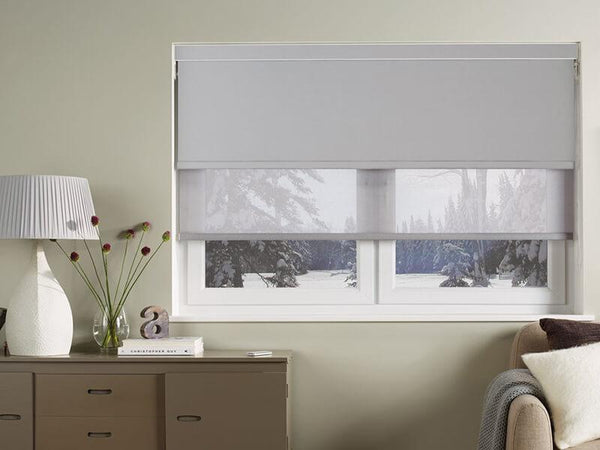

Roller Blinds vs Curtains: How to Choose for Your Sydney Apartment
If you've spent more than five minutes looking at window treatments for a Sydney apartment, you've probably hit the same wall: roller blinds or curtains? Both are everywhere. Both look great in the right room. And both can look completely wrong in the wrong one.
This guide cuts through the noise. We've measured and installed window treatments across thousands of Sydney homes — from Iron Cove waterfront apartments to Federation cottages in Drummoyne — and the answer almost always comes down to the same four things: the room, the light, the building rules, and the budget.
The short answer (if you're in a hurry)
- Roller blinds suit kitchens, bathrooms, home offices, and rooms where you want clean lines and precise light control.
- Curtains suit bedrooms, living rooms, and dining areas where warmth, acoustics, and softness matter.
- Both together — a sheer curtain over a roller blind, or a double curtain track — is the most flexible option for living areas and main bedrooms.
Now for the detail that actually helps you decide.
What roller blinds do well
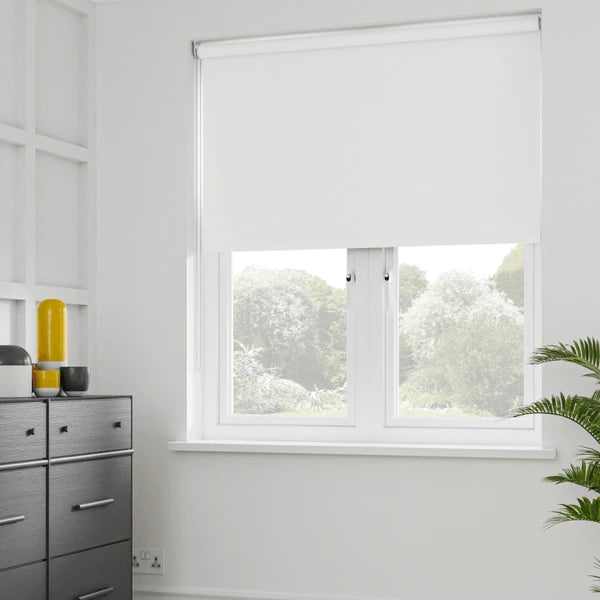
A roller blind is a single piece of fabric that rolls up into a cassette at the top of the window. It's the most space-efficient window covering available, which is why it dominates Sydney apartments, particularly in newer builds.
Light control is precise. You can stop the blind at exactly the height you want — half-down to let light in from the top while keeping privacy at eye level, or fully down for complete blockout. A quality blockout roller blind in a bedroom will darken the room completely at midday.
They work in wet areas. Curtains and bathrooms don't mix — fabric holds moisture, mildew follows. PVC-coated roller blinds or aluminium Venetians are the only sensible options for kitchens and bathrooms.
Strata compliance is easier. Many Sydney apartment buildings require window coverings to have a white or neutral backing visible from the street. Roller blinds manufactured with a white backing on the reverse satisfy this requirement while allowing you to choose any internal colour or texture.
They're lower cost per window. For a straightforward bedroom or living room window, a quality blockout roller blind will generally cost less than an equivalent pair of curtains on a track.
What curtains do well
Curtains do things roller blinds simply cannot — and the difference becomes obvious in a room you spend time relaxing in.
Insulation. A full-length blockout curtain creates an air gap between the fabric and the window that acts as insulation. In a Sydney winter — which is milder than Melbourne but still uncomfortable at 3am — that gap makes a measurable difference to bedroom temperature. In summer, blockout curtains keep morning sun out before air conditioning kicks in.
Acoustics. Fabric absorbs sound. In an apartment near Victoria Road, Parramatta Road, or the flight path, a set of full-length curtains reduces ambient noise noticeably — particularly in bedrooms where traffic noise at 5am is a real issue.
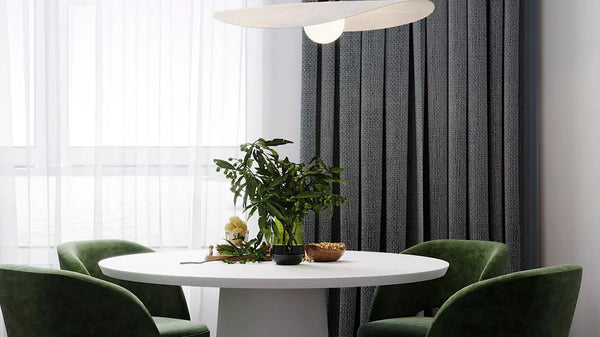
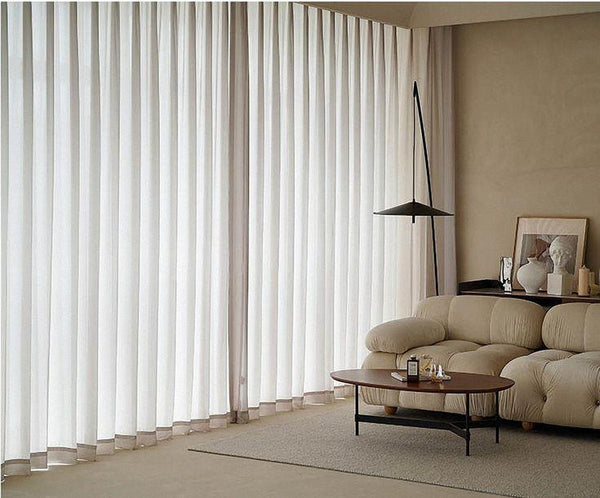
The look. Floor-to-ceiling curtains make a room feel taller. They add texture and movement that hard window coverings can't replicate. For a lounge room or master bedroom, curtains are often the finishing detail that pulls everything together.
Heritage homes. If you're in a Federation or Edwardian house in Drummoyne, Leichhardt, or Petersham, pinch pleat curtains are architecturally appropriate in a way that roller blinds rarely are. Ceiling heights of 3m to 3.6m call for something that fills the space.

The layering option most Sydney apartments are missing
The most common mistake we see is treating this as either/or. The best window treatments in Sydney apartments do both.
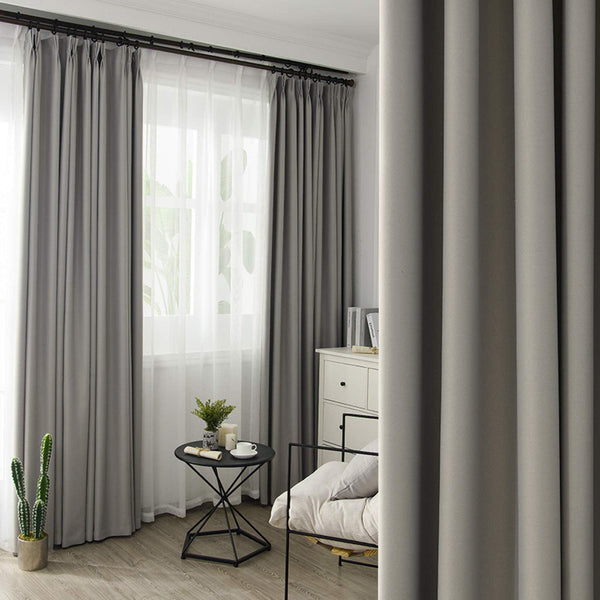
A double curtain track holds two layers: a sheer curtain in front, a blockout curtain behind. During the day, you draw the sheer and get soft, diffused light while maintaining privacy from the apartment building opposite. At night, you close the blockout layer and the room goes dark. You get the acoustics and insulation of full curtains, plus the light flexibility that a single blockout layer can't offer.
Alternatively, a sheer curtain in front of a roller blind achieves a similar effect for less — the sheer sits on a separate track closer to the window, the roller blind is mounted on the architrave behind it. Less elegant in profile, but effective and lower cost.
For a Parramatta River-facing apartment where the view matters and the afternoon glare is intense, this layered approach is almost always the right answer.
Room-by-room guide for Sydney apartments
| Room | Recommendation | Why |
|---|---|---|
| Bedroom | Blockout curtains, or double curtain track | Insulation, acoustics, complete darkness for sleep |
| Living / dining | Sheer curtain + blockout roller blind | Flexibility — diffused light during the day, privacy at night |
| Kitchen | Roller blind (PVC or moisture-resistant fabric) | Easy to wipe clean; no fabric near cooking splatter |
| Bathroom | PVC roller blind or aluminium Venetian | Moisture-proof; fabric grows mildew in wet areas |
| Home office | Blockout or light-filtering roller blind | Screen glare control; clean lines don't distract |
| Nursery | Blockout curtains (cordless or motorised) | Complete darkness for day naps; no cord safety risk |
A note on Sydney strata rules
If you're in a strata-titled building — which covers the majority of Sydney apartments — check your by-laws before ordering anything. Most buildings require window coverings visible from the exterior to be white, off-white, or a neutral tone. This doesn't mean your interior has to be white: it only affects the backing or lining.
For roller blinds, the solution is a white-backed blockout fabric — your internal colour stays as chosen, the street-facing side is neutral. For curtains, a white or cream lining on the back of the fabric satisfies the same requirement.
If you're unsure what your building allows, we can check during your measure and quote appointment. We've worked with strata managers across Sydney and know what's typically accepted.
Budget: what to expect
Prices vary significantly based on fabric quality, heading style, and window size — but as a general guide for Sydney custom-made window treatments:
- Blockout roller blind (single window, supply and install): from $89–$180
- S-fold or pinch pleat curtains (per pair, supply and install): from $280–$600+
- Double curtain track with sheer + blockout: from $450–$900+ depending on fabric and width
These are approximate ranges — the only accurate price is one measured specifically for your windows. We offer free in-home measure and quote across Greater Sydney, with a firm price on the day and no obligation.
Still not sure? Here's how we approach it
When we visit for a measure and quote, we look at four things before recommending anything: which direction the window faces, what's directly outside it (street, neighbour, open sky), how you use the room, and what the building rules allow. The right answer usually becomes obvious within a few minutes of being in the space.
We manufacture everything at our Homebush West factory, which means shorter lead times and the ability to make adjustments quickly if something doesn't look right after installation.