
Sydney Window Covering Energy Trends 2026: How Vertical Blinds and Smart Motorised Solutions Can Cut Your Power Bills by 30%
How much did you pay for electricity last year? If you own a detached home in Sydney, the answer is probably painful. The Australian Energy Regulator's Default Market Offer for NSW households in 2025-26 sits at approximately $1,965 per year — and actual bills often run significantly higher, with quarterly invoices regularly exceeding $600.
But here's a fact that most homeowners overlook: 40% of your home's heating energy is escaping through your windows. In summer, the situation is even worse — up to 87% of indoor heat gain enters through uncovered glass.
That means no matter how powerful your air conditioning or how thick your ceiling insulation, if your windows aren't properly covered, you're throwing money away with every energy cycle.
The good news? Modern window covering technology has advanced to remarkable levels. From honeycomb blinds that reduce heat loss by 40% to smart motorised systems that adjust automatically based on temperature and sunlight, window coverings have evolved from decorative accessories into genuine energy-saving investments.
This data-driven guide shows you exactly how much you can save — and which solutions deliver the best return on investment for Sydney homeowners.
Sydney's Climate and Window Energy Loss: The Numbers
To understand the value of energy-efficient window coverings, you need to understand how Sydney's climate drives heat transfer through your windows.
| Season | Months | Avg High | Avg Low | Daily Solar Energy | Window Challenge |
|--------|--------|----------|---------|-------------------|-----------------|
| Summer | Dec-Feb | 26°C | 19-20°C | 7.5 kWh | Excessive heat gain, intense UV |
| Autumn | Mar-May | 20-25°C | 12-18°C | 3.1-5.5 kWh | Large day-night temperature swings |
| Winter | Jun-Aug | 17-18°C | 9-10°C | 2.6-3.9 kWh | Heat loss, insulation critical |
| Spring | Sep-Nov | 21-24°C | 12-17°C | 5.2-7.0 kWh | Rising temperatures, increasing UV |
Source: Bureau of Meteorology (BOM) & WeatherSpark, Sydney Observatory Hill long-term averages
Sydney's summer solar radiation reaches 7.5 kWh per day, with west-facing and north-facing windows bearing the brunt. Winter lows drop to 9°C, and single-glazed windows — still common in the majority of Sydney homes — offer minimal thermal resistance. This means window coverings play a year-round role in energy management, not just summer shade or winter warmth.
Window Covering Energy Efficiency: A Comprehensive Comparison
Not all window coverings are created equal when it comes to energy performance. Here's how the main options stack up, based on data from the Window Shading Association of Australia, Sustainability Victoria, and the US Department of Energy:
| Window Covering Type | Winter Heat Loss Reduction | Summer Heat Gain Reduction | Overall Energy Savings | Price Per Window | Key Advantage |
|---------------------|--------------------------|--------------------------|----------------------|-----------------|--------------|
| Honeycomb/Cellular Blinds | Up to 40% | Up to 60% | Up to 34% | $200-$500 | R-value up to 5.0-7.0 |
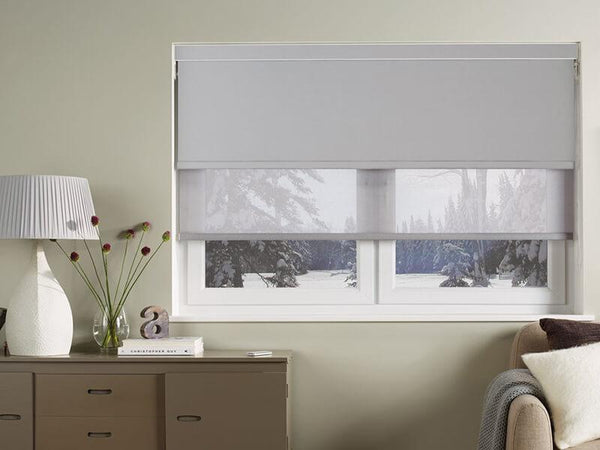
| Double Roller Blinds | 25-30% | 40-50% | 20-25% | $150-$400 | Dual layer flexibility |
| Blockout Roller Blinds | 20-25% | 30-40% | Up to 30% on cooling | $100-$300 | 99% light block + UV |
| **Vertical Blinds | 15-20% | 25-35% | 15-20%** | $59-$614 | Adjustable vane angles |
| Blockout Curtains | 20-33% | 30-40% | 20-25% | $200-$600 | Sound insulation bonus |
| Plantation Shutters | 15-20% | 20-30% | 15-20% | $400-$800 | Durable, adds property value |
| External Awnings | — | Up to 77% | Summer specialist | $500-$2,000 | Maximum solar heat reduction |
The standout performer: Honeycomb blinds lead the field by a significant margin. Their unique cellular structure traps air in individual pockets, functioning like miniature double glazing. Single-cell blinds add an R-value of 2.0-3.5, while double and triple-cell models can reach 5.0-7.0 — a dramatic improvement for windows that typically have an R-value below 1.0.
Vertical Blinds: The Flexible All-Rounder
While honeycomb blinds win on pure energy efficiency metrics, vertical blinds deliver unique advantages that make them an essential component of any whole-home energy strategy:
All-day precision control. By rotating vane angles throughout the day, vertical blinds let you fine-tune light and heat admission in real time. In Sydney's summer, allow gentle morning light through east-facing windows, then rotate to full blockout as the afternoon sun intensifies from the west. In winter, maximise north-facing solar gain for free passive heating, then close before sunset to retain warmth.
Engineered for large spans. Sydney detached homes commonly feature 3-5 metre wide sliding doors and picture windows — exactly where vertical blinds excel. No bunching, no heavy lifting, just smooth horizontal traversal. For detailed guidance on optimising light control with vertical blinds, see our dedicated guide.
Unmatched value. CAS Blinds' blockout vertical blinds start from just $59 per window, meaning you can cover five major windows for under $500 — freeing up budget for honeycomb blind upgrades on your highest-priority windows.
Smart Motorised Blinds: From Energy Saving to Intelligent Energy Management
If traditional window coverings represent "passive" energy saving, smart motorised blinds deliver "active" energy management. Through automated control, your window coverings no longer rely on manual operation — they adjust automatically based on environmental data, saving energy even when you're not home.
Smart Integration Features
| Feature | How It Works | Energy Benefit |
|---------|-------------|----------------|
| Scheduled automation | Opens/closes at preset times | Ensures sun protection during work hours |
| Light sensors | Auto-adjusts based on sunlight intensity | Maximises natural light, reduces artificial lighting |
| Temperature linking | Coordinates with thermostat | Reduces HVAC activation frequency |
| Voice control | Alexa / Google Home / HomeKit commands | Increases usage compliance |
| Away mode | "Leaving home" scene closes all coverings | Full-day unattended energy saving |
Motorisation Cost Guide
| Type | Price Range (Per Window) | Power Options | Smart Compatibility |
|------|------------------------|---------------|-------------------|
| Motorised roller blinds | $700-$1,500 | Battery / Solar / Hardwired | Alexa, Google, HomeKit |
| Motorised vertical blinds | $450-$1,200 | Battery / Hardwired | Alexa, Google |
| Motorised honeycomb blinds | $800-$2,000 | Battery / Solar | Alexa, Google, HomeKit |
| Motorised venetian blinds | $2,000-$8,000 | Primarily hardwired | All platforms |
The CAS Blinds + ALPHA Motors Partnership: CAS Blinds has partnered with ALPHA Motors, a specialist motorised window covering drive brand, to offer battery-powered motorisation solutions. The key advantage is no wiring required — battery-powered drives mean your existing blinds or curtains can be upgraded to motorised control without calling an electrician, dramatically reducing retrofit costs. Explore how motorised blinds and smart curtains can transform your home.
ROI Calculator: How Quickly Will Your Investment Pay for Itself?
Let's run the numbers using a typical Sydney detached home with five main windows:
Scenario 1: Budget-Smart Energy Solution (Vertical Blinds + Blockout Rollers)
| Item | Cost |
|------|------|
| 3 windows: blockout vertical blinds ($150 avg) | $450 |
| 2 windows: blockout roller blinds ($200 avg) | $400 |
| Total investment | $850 |
| Annual electricity (AER DMO baseline) | $1,965 |
| Estimated energy saving | 15-20% |
| Annual savings | $295-$393 |
| Payback period | 2.2-2.9 years |
Scenario 2: High-Performance Solution (Honeycomb Blinds Focus)
| Item | Cost |
|------|------|
| 3 windows: honeycomb blinds ($350 avg) | $1,050 |
| 2 windows: blockout roller blinds ($200 avg) | $400 |
| Total investment | $1,450 |
| Annual electricity | $1,965 |
| Estimated energy saving | 25-34% |
| Annual savings | $491-$668 |
| Payback period | 2.2-3.0 years |
Scenario 3: Smart Motorised Solution (Full Automation)
| Item | Cost |
|------|------|
| 3 windows: motorised honeycomb blinds ($1,200 avg) | $3,600 |
| 2 windows: motorised roller blinds ($900 avg) | $1,800 |
| Total investment | $5,400 |
| Annual electricity | $1,965 |
| Estimated energy saving (incl. automation bonus) | 30-40% |
| Annual savings | $590-$786 |
| Payback period | 6.9-9.2 years |
| Added value | Property valuation uplift, lifestyle convenience |
> 💡 The smart approach: Start with Scenario 1, fitting honeycomb blinds on your west-facing and north-facing windows (highest energy impact) and cost-effective vertical blinds everywhere else. Once the initial investment has paid for itself in 2-3 years, reinvest the ongoing savings into motorisation upgrades — essentially letting your energy savings fund the next level of efficiency.
Seasonal Window Covering Strategy for Sydney
Using the right strategy at the right time maximises your energy savings throughout the year:
Summer (October-February): Heat Defence Priority
-
West/north-facing windows: Deploy blockout coverings all day — reduces solar heat gain by up to 77% with external awnings, 40-60% with internal coverings
-
East-facing windows: Close in the morning to block sunrise heat, open in the afternoon when direct sun has passed
-
South-facing windows: Can remain open all day — south orientation receives minimal direct sunlight in the Southern Hemisphere
-
Smart automation: Set light sensors to close coverings when UV index exceeds 6
Winter (May-August): Heat Retention Priority
-
North-facing windows: Open coverings during daylight to capture free solar heating, close 30 minutes before sunset to trap warmth
-
All windows: Close all coverings at night — creating an insulating air pocket between the covering and glass
-
Honeycomb advantage: The R-value insulation effect is most valuable during winter's coldest nights
-
Smart automation: Link to thermostat — automatically open north-facing coverings when room temperature drops below 20°C
Transition Seasons (March-April, September): Flexibility Priority
-
Vertical blinds shine here — adjust vane angles to manage the large day-night temperature swings typical of Sydney's autumn and spring
-
Double roller blinds are equally effective — use the light-filtering layer by day, switch to blockout at night

Frequently Asked Questions
Q: Can window coverings really save that much on energy bills? What's the evidence?
A: Yes. The Window Shading Association of Australia and Sustainability Victoria confirm that 40% of heating energy escapes through windows and appropriate coverings can save 15-34% on energy bills. The US Department of Energy found that tightly fitted cellular shades reduce window heat loss by 40% or more.
Q: Are there NSW government rebates for energy-efficient window coverings?
A: The NSW Energy Savings Scheme (ESS) primarily covers air conditioning, LED lighting, and insulation — window coverings aren't currently on the direct rebate list. However, if you're undertaking a comprehensive energy efficiency upgrade (e.g., ceiling insulation + window coverings), you may qualify under broader improvement categories. Consult an accredited assessor for the latest eligibility information.
Q: How long do motorised blind batteries last?
A: ALPHA Motors battery-powered systems typically last 6-12 months between charges, depending on usage frequency. Solar-rechargeable models, combined with Sydney's generous 2,640 annual sunshine hours, can run virtually maintenance-free. Hardwired systems eliminate battery concerns entirely.
Q: Can my existing blinds or curtains be upgraded to motorised?
A: Yes. The CAS Blinds + ALPHA Motors solution supports retrofitting motorised drive modules onto existing curtain tracks and blind systems — no need to replace everything. Battery power means no rewiring, keeping retrofit costs significantly lower than full replacement. Book a free in-home assessment to have a technician evaluate your current setup and recommend the optimal upgrade path.
Q: Which window orientation should I prioritise first?
A: Priority order: West > North > East > South. West-facing windows experience the most intense afternoon sun in summer AND the greatest heat loss in winter, delivering the highest ROI on window covering investment. North-facing windows offer winter solar heating opportunities but need summer protection. South-facing windows receive the least direct sunlight in the Southern Hemisphere and can be addressed last.
Making Your Energy Investment Decision
Choosing energy-efficient window coverings isn't just a decorating decision — it's one of the smartest energy investments you can make for your Sydney home. With electricity prices on a sustained upward trajectory, a well-planned window covering strategy pays for itself in 2-3 years, with every subsequent year delivering pure savings.
Your action plan:
-
Assess your priority windows: West-facing and north-facing windows first — they drive the highest heat gain and loss
-
Choose a mixed strategy: Honeycomb blinds for maximum-impact windows, blockout vertical blinds for cost-effective coverage everywhere else
-
Consider phased upgrades: Start with manual coverings, upgrade to motorised once initial savings have funded the next investment
-
Get professional advice: Every home is different — professional assessment ensures optimal product selection for your specific orientation, window sizes, and lifestyle
CAS Blinds offers free in-home measuring and energy efficiency consultation across Greater Sydney, from $59 blockout vertical blinds to smart motorised solutions powered by ALPHA Motors — a complete one-stop solution for your window covering energy needs.
Ready to start cutting your power bills? Browse CAS Blinds' energy-efficient range, book a free professional measure and quote, or visit the Homebush West showroom to see the products in person.