
Double Roller Blinds: The Complete Guide to Day-and-Night Light Control in One Window
Double Roller Blinds: The Complete Guide to Day-and-Night Light Control in One Window
Most window blinds ask you to pick a side. Block the light, or let it in. Privacy, or a view.
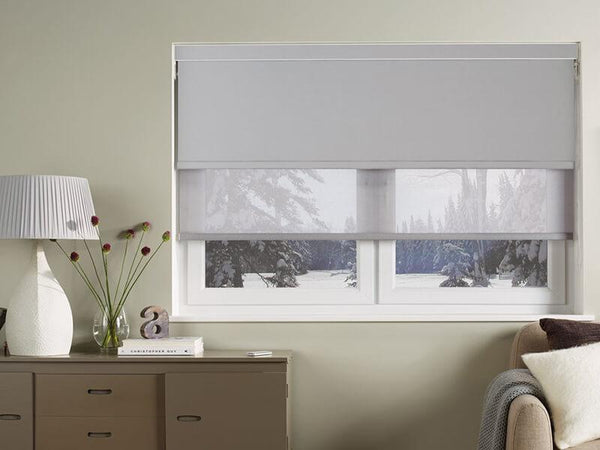
Double roller blinds — also called day night blinds — skip the compromise. Two fabrics on one bracket — a sunscreen or sheer for the daytime, a blockout for the night — each operating independently. One window, two moods, zero fuss.
If you've been weighing up your options and keep circling back to "but I want both," this guide is for you.
How Double Roller Blinds Actually Work
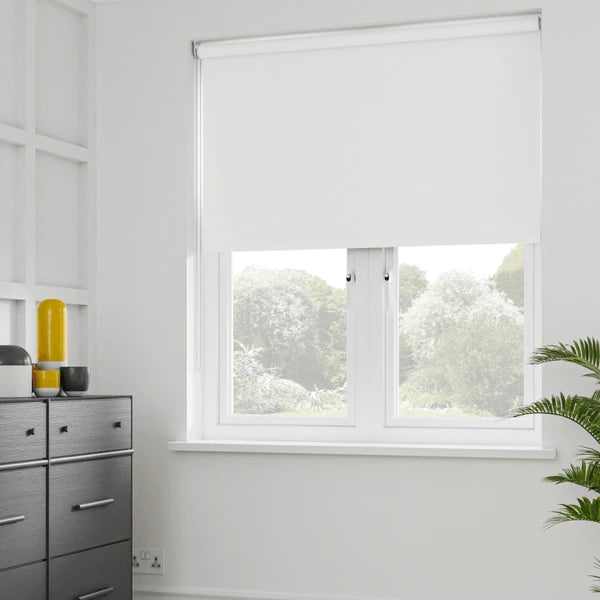
The concept is straightforward. A single mounting bracket holds two roller tubes, one in front of the other. Each tube carries a different fabric, and each has its own chain or motor. Pull down the front layer for soft filtered light during the day. Pull down the back layer when you want complete darkness at night.
During the day, most people leave the sunscreen layer down. It cuts glare and UV while still letting you see the garden or the street. Come evening, you pull down the blockout layer behind it. Some homeowners use both layers together for extra insulation on cold winter nights — the air pocket between the two fabrics acts as a thermal buffer, a principle we explored in more detail in our energy-efficient window coverings guide.
The key difference from having two separate blinds? Everything sits flush in one headrail, with a cleaner look and less hardware cluttering your window frame.
The Best Fabric Combinations (And What Each One Does)
Not all double roller setups are created equal. The magic is in choosing the right pair of fabrics for how you actually use the room.
Sunscreen + Blockout (The Classic)
This is the most popular combination across Sydney homes, and for good reason. The sunscreen fabric (typically 3% to 10% openness factor) reduces glare and blocks up to 95% of UV rays while maintaining your view. The blockout layer behind it delivers total darkness when you need it.
Best for: Living rooms, home offices, bedrooms that face east or west.
Light Filtering + Blockout
If outward visibility isn't a priority but you still want soft, diffused natural light during the day, a light filtering fabric replaces the sunscreen in front. It creates a warmer, more even glow without the defined view-through. Not sure which option suits your space? Compare our light filtering and blockout roller blinds to see the difference in fabric and light levels.
Best for: Bedrooms, nurseries, media rooms — anywhere you want gentle ambient light by day and total blackout by night.
Sunscreen + Light Filtering (The Subtle Pair)
Less common, but worth considering if you never need full blackout. This combination gives you two levels of filtered light — one that preserves the view, and one that softens everything to a warm haze.
Best for: Kitchens, dining areas, hallways where full darkness isn't necessary.
Room-by-Room: Where Double Rollers Make the Most Sense
Living Room
This is where double rollers earn their keep. You want natural light during the day without the TV screen turning into a mirror, and privacy at night without feeling like you're living in a cave. A sunscreen + blockout pair handles both scenarios with one pull of a chain.
For open-plan living and dining areas with wide windows or sliding doors, some homeowners also consider vertical blinds — but where depth and layered control matter, double rollers are the more versatile choice.
Bedroom
Research from the Sleep Health Foundation — Australia's leading authority on sleep health — identifies darkness as one of the three environmental factors most critical to quality rest, alongside temperature and quiet. A blockout layer handles that. But nobody wants to wake up in a bunker — the sheer or light filtering layer lets morning light seep in gently when you choose to raise the blockout.
For nurseries, the combination is particularly effective. The blockout fabric creates reliable nap-time darkness, while the front layer keeps the room feeling warm and alive during play hours.
Home Office
Glare on screens is the enemy of productivity. A sunscreen fabric with a low openness factor (3% to 5%) cuts glare while keeping the room connected to the outside. When you're done working, the blockout layer turns the office back into a private space.
If your home office doubles as a guest room — increasingly common in Australian homes — the dual function becomes essential rather than optional.
Kitchen and Dining
Kitchens need light — lots of it. A sunscreen layer keeps the space bright while protecting benchtops and cabinetry from UV fading. The Australian Government's YourHome guide notes that UV damage to interior furnishings is cumulative and largely irreversible, making window protection a genuine long-term investment. Full blockout is rarely needed here, so a sunscreen + light filtering combination can work well without sacrificing function.

Double Rollers vs Single Rollers: Is It Worth the Extra?
Let's be direct. Double roller blinds cost more than a single roller — typically 1.5 to 1.8 times the price, depending on fabric choices and window size. That's two fabrics, two mechanisms, and a wider bracket.
But here's what you're actually comparing:
|
Feature |
Single Roller |
Double Roller |
|
Light control |
One setting |
Full range — sheer to blackout |
|
Privacy (daytime) |
Depends on fabric choice |
Yes, with sunscreen layer |
|
Total blackout |
Only if you chose blockout fabric |
Yes, always available |
|
UV protection |
Partial (if sunscreen) |
Strong (dedicated sunscreen layer) |
|
Insulation |
One layer |
Two layers = better thermal performance |
|
Visual bulk |
Minimal |
Slightly wider headrail |
If you'd otherwise buy two separate blinds for the same window — one sheer and one blockout — double rollers are actually the more economical and tidier option.
Where single rollers still win: small windows where space is tight, budget-driven projects, and rooms where you genuinely only need one function (a pantry doesn't need day-and-night flexibility). And if your decision is really between different product types altogether — say, rollers versus shutters — comparing plantation shutters against roller blinds is worth doing before you commit, as they serve quite different aesthetic and functional roles.
Installation: What You Need to Know
Headroom Matters
Double roller blinds need more depth than singles. You'll need roughly 100mm to 120mm of mounting depth for a face-fix installation, or adequate clearance inside the window reveal for a recess fit. If your window frames are shallow, face-fixing (mounting on the wall above the window) is usually the better option.
DIY or Professional?
Both work. If you're comfortable with a drill and a level, double rollers are no harder to install than singles — the bracket is just a bit wider. CAS Blinds provides step-by-step video guides for every DIY order, and our factory-direct model means you're not paying a middleman markup whether you install yourself or book our professional team.
For Sydney customers, we offer free measure and quote across the metropolitan area. Our installers handle the headroom assessment, bracket positioning, and final adjustment — useful if you have multiple windows or tricky architraves.
Motorisation
Double rollers pair beautifully with motorised operation. Instead of two chains hanging from one bracket, you get clean remote-controlled operation — one button for the sheer, another for the blockout. ALPHA tubular motors integrate neatly into the roller tubes, and the whole setup can connect to smart home systems for scheduled adjustments. For a deeper look at what motorisation involves and whether it's right for your setup, see our complete guide to motorised blinds.
If you're considering motorisation, it's worth factoring it in from the start. Retrofitting motors is possible but adding them during the initial order is simpler and more cost-effective.
Choosing Your Fabrics: A Practical Checklist
Before you order, run through these questions:
-
Which direction does the window face? North and west-facing windows cop the most heat and glare — go with a lower openness factor (3%) on your sunscreen.
-
Do you need total blackout? If yes, make sure the back layer is genuine blockout fabric, not just a dark-coloured light filtering material. True blockout has a coating that stops 100% of light.
-
What colour works with the room? The front (daytime) fabric is what you'll see most. Choose a colour that complements your walls and furniture. The back (blockout) layer is less visible — white or neutral tones work for most situations without affecting the room's feel.
-
Indoor or outdoor exposure? For windows exposed to heavy sun, UV-stabilised fabrics last longer. All CAS Blinds fabrics are tested for Australian conditions, but it's worth mentioning your window's exposure when you order.
-
Cord or motorised? For windows above 1.5 metres wide, motorised operation makes daily use noticeably smoother. It's also the safer option for homes with young children — no dangling cords. Australian product safety regulations require child-safe cord solutions on all new blinds, and motorisation eliminates the issue entirely.
What Factory Direct Actually Means for Your Double Rollers
When you order dual roller blinds from CAS Blinds in Sydney, your blinds are cut, assembled, and quality-checked in our Homebush West factory. There's no importer, no distributor, no showroom markup in the middle.
That matters more with double rollers than with simpler products, because you're ordering two custom-cut fabrics and a precision bracket — more components where getting the measurements right is critical. Dealing directly with the manufacturer means faster turnaround if something needs adjusting, and no finger-pointing between a retailer and a supplier.
Our standard turnaround is 5 to 7 business days from payment, with delivery across Australia. Sydney metro customers can also take advantage of our free measure-and-quote service — we'll confirm your window dimensions, check headroom clearance, and recommend the best fabric pairing for your space before anything goes into production.
How to Care for Double Roller Blinds
One of the practical advantages of roller blinds over curtains or shutters is how little maintenance they need. Double rollers are no different — the two-fabric setup doesn't add any real complexity to upkeep.
Regular dusting: A quick pass with a microfibre cloth or a vacuum with a brush attachment once every few weeks keeps both layers clean. Start from the top and work down. If your blinds sit in a kitchen near a cooktop, you'll want to dust more frequently to prevent grease buildup on the front fabric.
Spot cleaning: For marks or stains, a damp cloth with mild soapy water usually does the job. Test on an inconspicuous corner first, especially with light-coloured fabrics. Avoid harsh chemicals or abrasive cleaners — they can damage the UV coating on sunscreen fabrics and strip the backing on blockout materials.
Mechanism care: The chain or motor mechanism needs almost zero attention. If a chain feels stiff, a tiny drop of silicone lubricant on the clutch mechanism restores smooth operation. For motorised setups, keep the remote's batteries fresh and check that the programmed limits haven't drifted after a power outage.
What shortens lifespan: Pulling the fabric at an angle (always pull straight down), leaving blockout blinds fully extended in direct summer sun for weeks at a time (the heat can soften adhesive backings), and using steam cleaners on any roller fabric.
With normal household use, quality double roller blinds hold up well for 8 to 12 years before fabrics start to show their age — and because each layer operates independently, you can replace one fabric without replacing the entire unit.
Common Mistakes When Choosing Double Roller Blinds
After two decades of manufacturing and fitting double rollers across Sydney, these are the errors we see most often:
Ignoring headroom clearance. This is the number one installation headache. Buyers order recess-fit double rollers for windows with shallow reveals, then discover the bracket won't fit inside the frame. Always measure the depth of your window reveal before choosing a mount type — you need at least 100mm for most double brackets.
Choosing fabrics based on looks alone. A charcoal sunscreen might look sharp in a showroom swatch, but in a west-facing bedroom it can absorb heat and turn the room into an oven. Function first — match the fabric's technical properties (openness factor, thermal performance) to the window's orientation, then narrow down by colour.
Skipping motorisation on hard-to-reach windows. That window above the staircase or behind the bathtub? You'll use the blinds more if they're motorised, and use them less (or never) if they need a dangling chain you can barely reach. Factor in access, not just cost.
Mixing fabric weights poorly. Pairing a heavy blockout with a very lightweight sheer can cause the front fabric to bow or sag when both are partially lowered. Your manufacturer should advise on compatible fabric weights — if they don't, ask.
Ordering the wrong drop length. For double rollers, the drop measurement needs to account for the slightly lower starting point of the front tube. The front fabric hangs a few centimetres lower than the back one within the same headrail. A standard single-roller measurement might leave your front layer a touch short.
Frequently Asked Questions
Are double roller blinds more expensive than buying two separate blinds?
Generally, no. Two individual roller blinds for the same window means two brackets, two sets of hardware, and often a gap or overlap between them. A double roller system uses one wider bracket and achieves a cleaner result with less installation work. The combined cost typically sits below what you'd pay for two quality singles installed separately, with a far neater finish.
Can I get double roller blinds for very wide windows?
Yes, but there are practical limits. Most manufacturers can produce double rollers up to about 3 metres wide in a single unit. Beyond that width, the roller tubes can develop flex or sag under the fabric's weight, especially with heavier blockout materials. For wider openings — like sliding door runs or panoramic windows — linking two double roller units side by side with a shared pelmet gives the cleanest result.
Do double roller blinds work with smart home systems?
They do, when fitted with compatible motors. ALPHA tubular motors, which CAS Blinds uses, integrate with most smart home platforms. You can set schedules — sunscreen down at sunrise, blockout down at 9 pm — or control them by voice through Alexa or Google Home. Each fabric operates independently, so you get granular control over both layers from a single app.
How do I clean between the two fabric layers?
The gap between the front and back layer in a standard double roller is about 30mm to 40mm. Dust does accumulate in there over time, though less than you might expect since the fabrics act as partial barriers. A slim vacuum nozzle attachment reaches into the gap easily, or you can roll both fabrics up fully and wipe the headrail area. Once or twice a year is usually sufficient.
Can I replace just one fabric without replacing the whole unit?
Yes — that's one of the underrated benefits of the double roller design. If your blockout layer fades or your tastes change, a manufacturer can cut a new fabric to your existing roller tube dimensions. The bracket and mechanism stay in place. This means your double rollers can evolve with the room over the years without a full replacement.
The Short Version
Double roller blinds give you the flexibility of two window treatments in one clean package. They're not the cheapest option on the market, but for rooms where light control actually matters — living areas, bedrooms, home offices — they're one of the smartest investments you can make.
Pick your fabric combination based on how you use the room, not just how it looks. Make sure your window has enough headroom for the dual bracket. And if you're doing more than two or three windows, seriously consider motorisation — your future self will thank you.
Ready to see how double rollers would work in your home? Get a free measure and quote for Sydney, or browse our roller blinds collection for DIY orders delivered Australia-wide.